TABLE OF CONTENT:
Where Africa Green Talent Want to Work
Investors are Now Getting Answers to One Critical Question
What Happens When African Universities Become World-Class
The New OECD Critical Minerals Africa Report is out: I’m adding a Skills Chapter
UPDATE: Solving Funding and Partnerships for Projects – an Executive Training
RESOURCE: Our Local Talent Framework in the Katanga Business Meeting 2026 Report
UPDATE: “Building resilience: What skills are needed for African cities, infrastructure, and organizations in the face of climate change?” - our upcoming webinar.
UPDATE: Patrick Gaincko Will Speak at the Egypt Energy Show 2027
Where Africa’s Green Talent Want to Work: A Signal from the Platform Impact Job Days.
Reading time: 6’42’’
SUMMARY: Africa’s green talent points first to the agriculture sector as their first choice for starting and growing a career.
This is a preliminary finding from our analysis of the CVs and career aspirations of 750 university graduates and early-career professionals from 25 African countries who participated to Impact Job Days, a platform dedicated to sustainability jobs and projects.
For employers, this finding suggests the existence of a solid pool of interest they can tap into for addressing talent shortages.
For funders and development actors, it offers a way to check if the sectors they support match what young talent wants.
Since 2023, green talent from 25 African countries engages with Impact Job Days (IJD), a platform connecting employers and university graduates and early-career professionals around sustainability careers and projects.
Every year around 750 talent describes their professional profile on the IJD website, while every June when IJD culminates in a career event, a fraction representing around 400 talent meets employers in the Democratic Republic of Congo (DRC) and in the Republic of Congo.
As co-founders and co-organizers of IJD, we have collected the career aspirations of 2250 green talent on a yearly basis between 2023 and 2025.
Agriculture emerges as the preferred sector among green talent.
Consistently, year after year, green university graduates and early-career professionals have indicated that agriculture is their first choice for starting and growing a career.
In 2025, agriculture accounts for approximately 39.4% of respondents' first-choice career preferences. It accounted for 35% in 2024 and 33.8% in 2023.
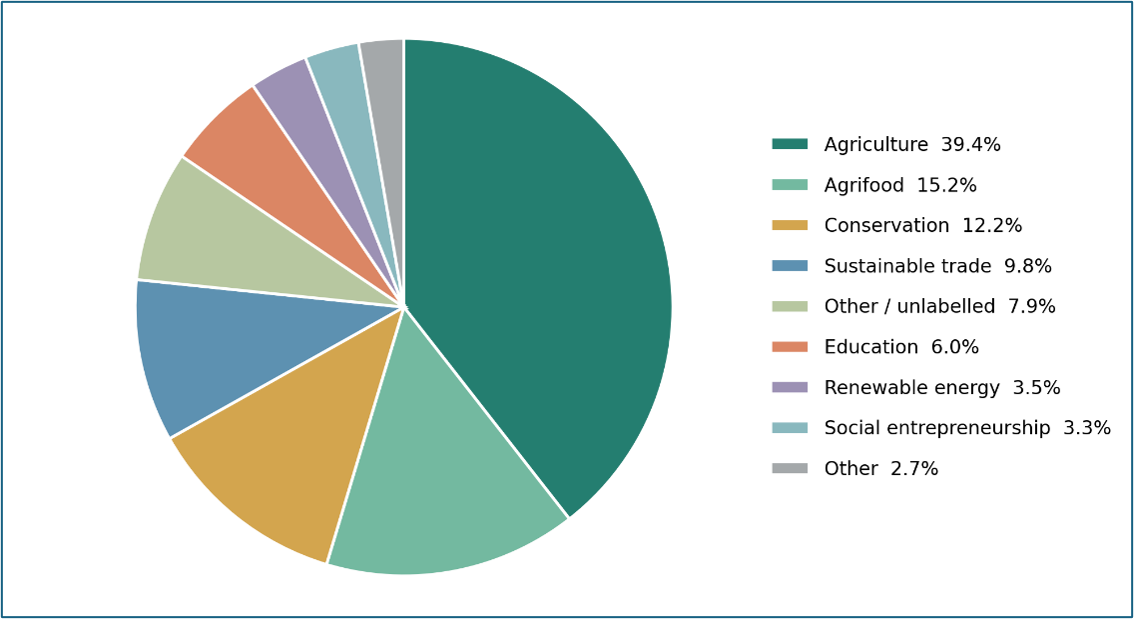
Industry preferences of 750 African green talent at IJD 2025
But the findings reveal a more diversified picture, beyond the appetite for agricultural careers.
When respondents identify their other preferences, they say they are attracted by agrifood (15.2%), conservation (12.2%) and sustainable trade (9.8%).
Surprising or not? How the finding fits expectations
This finding may come as unsurprising, if we make the following two hypotheses:
1) As food security remains one of the most pressing issues, if not the most closely felt by African young talent, the latter may want to turn solving this issue into a professional career.
2) Both the agriculture and the agrifood sectors have seen major developments in recent years. For instance, Plantations & Huileries du Congo, one of the largest agrifood companies in DRC, has opened a new high-tech driven processing plant. Heineken, a major beverage company in the central African region, has run several programs supporting agricultural SMEs and educational institutions.
These highly publicized developments combined may have generated strong interest among graduates and entrepreneurs.
At the same time, this finding may appear as a surprise because, in our experience, most green talent lives in urban areas. One would therefore expect them to choose sectors that are highly present in the urban context.
What are the implications?
Talent aspirations provide a market signal. They tell employers, development organizations, and investors where talent sees opportunities for training, jobs, careers, and business.
The real test is whether jobs, training and finance exist where the interest is.
For employers in agriculture and agrifood: This suggests the existence of an interest in agricultural and agribusiness jobs they could leverage for addressing skills shortages.
For companies in sectors such as mining and forestry: This finding points to a pool of young entrepreneurs they could take advantage of for non-core projects related to agriculture and agrifood.
For international development institutions: Training and entrepreneurship programs in agriculture would build on interest that already exists, not create it from scratch. The question is whether those programs reach young people where they are, including in cities.
For funders: Talent interest is a leading indicator of where new enterprises will find people. The gap to fill is between interest and jobs: training, internships and finance for young-led agribusinesses.
This is a first look. The State of Green Talent in Africa Report, due in early 2027, goes further. It will examine such questions as: what skills and abilities exist in the green talent pool, how preferences differ by gender, where the gap between interest and opportunity is widest, what young talent says it needs to turn ambition into a career.
As we are writing the report, we are inviting a small group of partners to help shape the questions and receive the findings first. To join this conversation, please contact Carole Kroonen.
Definition: Sustainability (green) talent refers to students and professionals whose knowledge, skills, and motivation enable organizations to implement sustainable practices, such as paying fair wages, supporting local businesses, cutting waste, sourcing raw materials responsibly, etc.
About the data:
Source: Impact Job Days participant profiles, CVs and career aspirations, 2023–2025. The authors co-founded and co-organize the platform.
Sample: 2250 profiles overall; 2026 results are based on 750 participants.
Countries: 25 overall. 2026 sample: DRC 23%, Republic of Congo 18.1%, Benin 14.7%, Côte d’Ivoire 12.3%, Cameroon 12%, Senegal 9.8%, Mali 5.8%, Guinea 4.3%.
How preferences were captured: first-choice sector selected at registration.
Sectors: “Other/unlabelled” (23.4%) groups logistics, transport, tourism, hospitality and water management.
Limits: Participants chose to join a sustainability jobs platform, so results reflect their aspirations, not those of all African graduates, nor the availability of jobs.
Signals & Observations
Reading time: 6’35’’
Signal #1: When African Universities Become World-Class, Who Hires the Graduates?
In September 2026, Rabat Business School in Morocco has reached #10 in the authoritative Financial Times “Masters in Management” ranking. This is a major achievement for the African higher education sector since it’s the first time an African program by reaches that level on a global scale, competing with such leaders as the London Business School and HEC Paris.
Also, Rabat Business School has reached the triple crown status, which is the simultaneous accreditation by the three major international accreditation organisations, namely AACSB, EQUIS, and AMBA.
Only one percent of business schools across the world are triple crown.
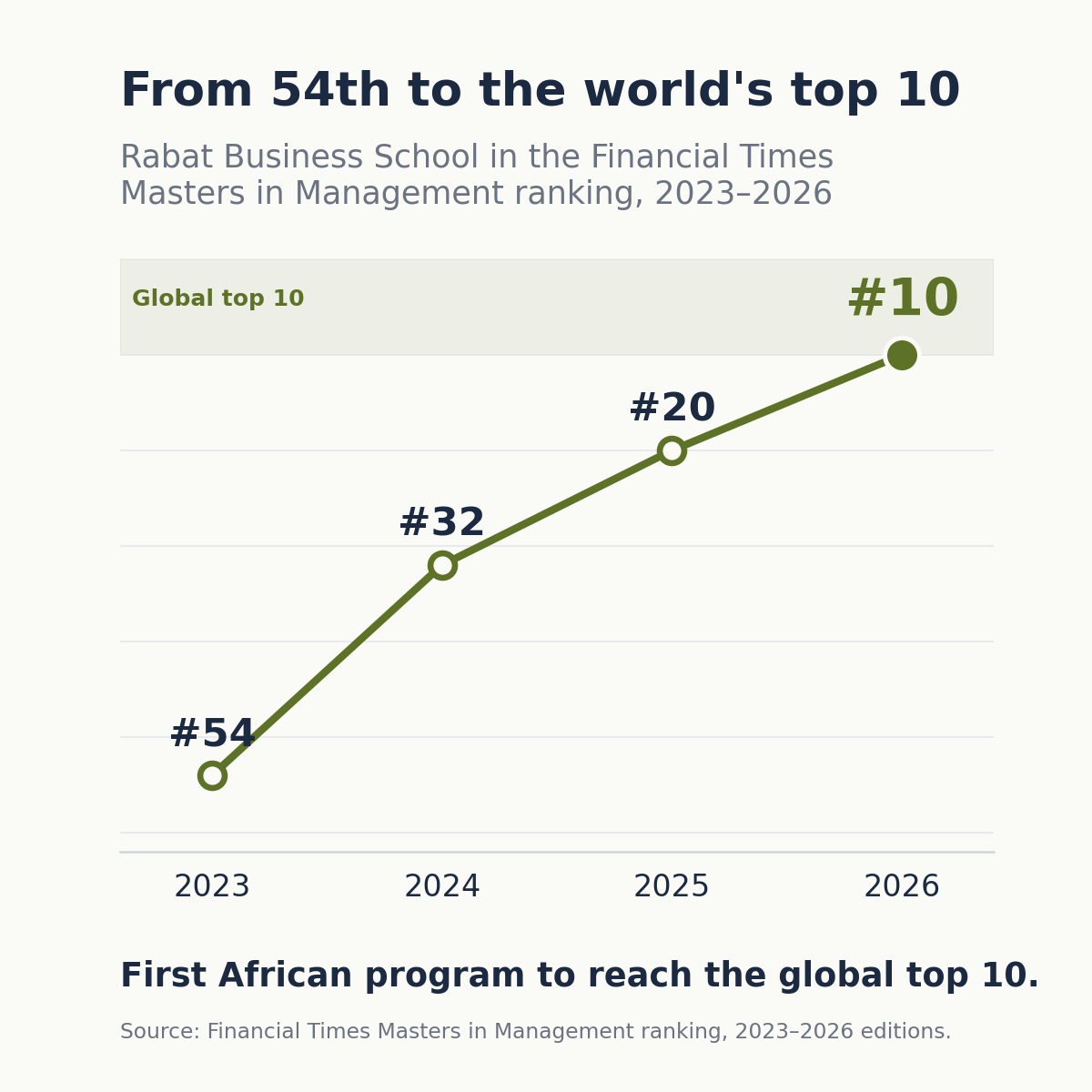
Why this Matters: A top 10 ranking gets noticed by employers across the world. They can feel confident about attracting African talent.
Universities from across the world are already competing for African talent. Last year the University of Liège (Belgium) launched an MBA program in Kinshasa DRC. This year, Campus France, has not slowed down its student recruitment campaigns across Africa.
What to Watch: A few weeks ago at an investor event in Paris, Sophie Sidos, President of the CCEF, a French business leaders association, lamented that many French university graduates don’t return to France after completing their internships abroad.
My hypothesis: Once French graduates acquire international experience, they change expectations. They believe they will not find opportunities matching their skills, experience, and ambitions in the French labour market.
I suspect the same will happen with young African talent: once they graduate from top universities like Rabat Business School, they will change expectations.
So, the question becomes: Can African employers, who have been calling for highly skilled, globally competitive African talent for years, offer opportunities that match top African talent expectations?
So what: Investing in African universities without consideration for what graduates’ expectations – pay, responsibility, career paths, can have the unintended consequence of building the global labour market and worsening the brain drain.
For employers: Start designing competitive offers for globally exposed graduates.
For funders: Pair investment in university quality with investment in the local labour market that can absorb the graduates.
Signal #2: Investors Are Now Asking a Different Question: Who Will Do the Work?
“Macroeconomic recovery”
“Private Investment is Taking the Lead”
“FDI is Recovering – Now the Objective is Scale”
“Regaining our position as a leading African FDI Market”
These are some of the slides displayed on big screen by a Minister of Investment and Foreign Trade at an investor forum in Paris a few weeks ago.
At the roundtables, in the minutes that followed the presentation, investors were discussing the dynamics of local industries, the structuring of their market entry, etc.
Clearly, the presentation seemed to have been effective at building investor confidence.
Yet to many investors, the presentation and the subsequent conversations seemed like appetizers. The main course was still to come.
Then came a session titled “Vocational Training: A Priority”. Suddenly, the main room filled again, and the session eventually ran over time.
This is a pattern that I see repeatedly in investor forums: The human capital dimension of investments gets strong interest.
Why this matters: Investor forums typically focus on ease-of-doing-business indicators, such as institutions and governance, infrastructure, risk ratings, and fiscal policy.
But today investors face a double challenge: 1/ talent shortages are enduring across geographies and 2/ many projects across industries from infrastructure to energy to agriculture require that capabilities evolve rapidly.
This is driving investor forums to increasingly address how human capital issues impact investment plans.
What are the questions investors want to get answered:
Whether it’s at the DRC Mining Week 2026 where a key phrase was “American values with a Congolese face” in a panel discussion focusing on the return of US investment in that region, or at the Egypt Business Forum in Paris, or at the African Development Bank Annual Meetings in Brazzaville Congo; investors needed answers to questions such as:
1) Where will the capabilities come from?
2) Which capabilities exist locally?
3) How do we develop future employees?
4) How do we meet local-content expectations?
5) How do we avoid simply importing expatriates?
6) How do we become an employer young Africans want to work for?
7) How do we make our investment create visible employment and skills benefits?
Taken together, these questions point to a shift in investor forums.
Capital can finance a mining exploration project, a solar farm expansion, or a forest rehabilitation program, but it cannot itself build the engineers, technicians, experts, and other capabilities needed to operate, manage, and develop them.
Therefore, the discussion becomes: Who will make the investment work?
What I expect:
Investors will build a human capital component into their plans from day one. Alongside the financial, technical and regulatory components, investment plans will increasingly include such topics as a workforce and capability strategy, and how to activate the local human capital ecosystem.
For investors and funders: Being able to show where capabilities will come from will become part of what makes an opportunity credible.
For forums: It means moving human capital from a side session to the main room.
No Skills Chapter in the New OECD Critical Minerals in Africa Report. I’m Starting One Here.
Reading time: 4’40’’
The new report from the OECD provides several recommendations for private-, institutional-, and public stakeholders in the African mining industry for capturing more value from the continent’s minerals.
Yet, the report doesn’t have a chapter on skills.
So I pieced the skills-related mentions together and here is what my take on them, in four points.
#1: No value addition without skills addition
The report says that countries wanting to move beyond extraction and get more value from minerals need to create enabling conditions, among which is a skilled workforce.
It argues that industrial strategy needs to strengthen technical skills.
My Perspective: Industrialization is high in the mining industry agenda, what is often missing is a concrete approach when it comes to mining workforce development.
This is becoming problematic to workforce development actors, based on my experience.
A concrete approach would mean addressing such questions as:
How to raise awareness about mining career opportunities. Because 10 million of young talent enter the labour market annually across Africa, the lack of awareness represents a substantial missed opportunity to tackle enduring skills shortages.
How to fill job vacancies faster. Mining jobs remain unfilled longer than jobs in most industries (up to 65 days vs 30-40 days on average in other industries). This is causing a serious productivity loss.
How to retain young professionals? Many leave the mining sector within their first three years.
#2: “Mining skills” are becoming much broader than mining skills
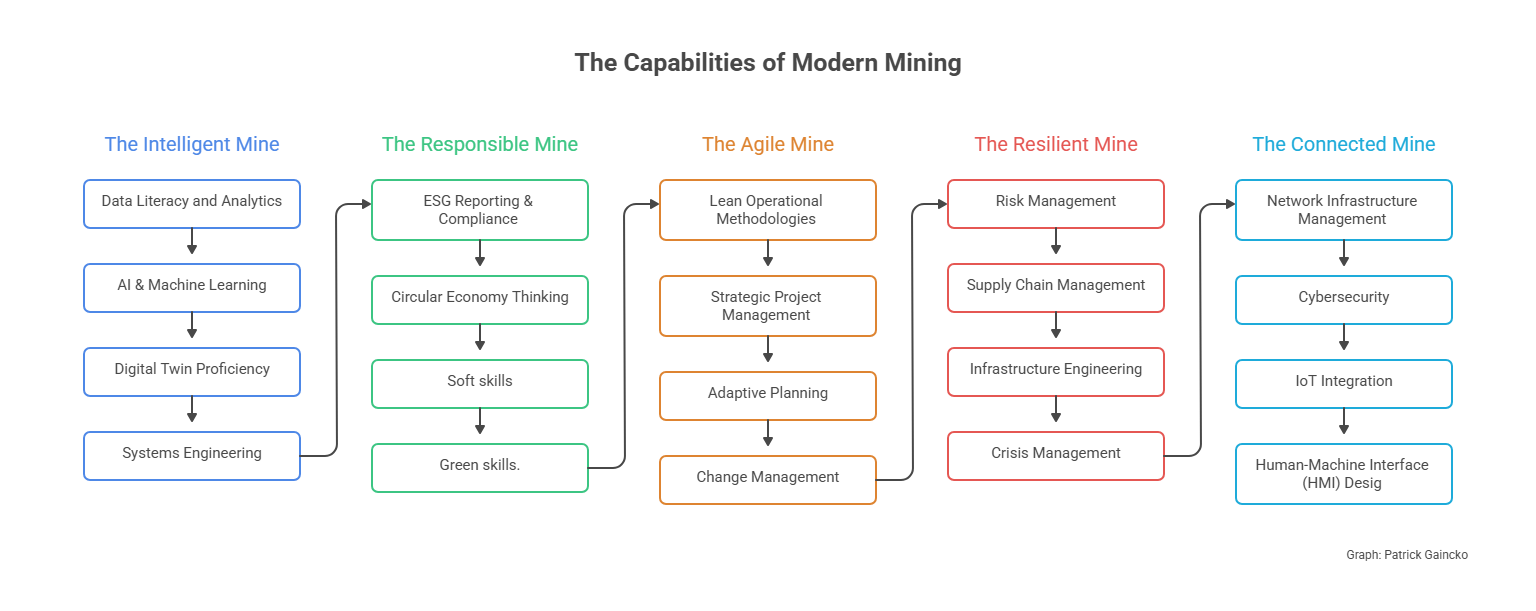
The OECD says that investment in human capital must go beyond geologists and geochemists to include data scientists, resource modellers, GIS specialists and other roles.
My Perspective: The mines of the future will not operate in a silo, but rather as a component of an ecosystem. This means that mining professionals will need to be skilled, not only in “mining skills”, but also in green skills, human skills (managing stakeholders, collaboration, effective communication, etc.), and entrepreneurship skills.
Therefore, instead of “How many mining graduates do we need”, a better question will be “What capability ecosystem does a modern mining economy require”?

#3: Technology will not solve capability gaps
The OECD discusses the deployment of blockchain and AI for due diligence and traceability. It points out that these new tools require significant
infrastructure investment, technical expertise, and reliable data systems. Where those capacities don’t exist, digitalization can create exclusion.
My Perspective: Last June, as digitalization was a major topic at two major mining conferences in DRC. The recurring message: the political will is there, the technology has been bought, but the adoption by teams is behind.
Buying technology is the easy part. Digital transformation only works when people’s perceptions, motivations and behaviours change with it. Technology doesn’t close the skills gap; it makes it more urgent.
#4: Universities belong inside the mining ecosystem, not outside it.
The OECD recommends collaboration with universities, research institutes and regional organisations for ongoing capacity development.
My Perspective:
As industry skills needs are changing faster than curricula, universities can no longer afford to remain just training providers. They must play an active role in training, employability, placement, continuous learning, and applied innovation.
This means that they will go beyond just collaborating with the private sector, but rather become an integral part, in mining ecosystems, even an anchor.
Putting it together
Ultimately, the report asks international partners to pair offtake agreements with investment in processing, infrastructure, energy and skills. It also asks companies to invest in skills and supplier development.
If skills are on the checklist, they deserve a full chapter in the plan.
EXECUTIVE TRAINING: Solving Funding and Partnerships for Impact Projects
BRAZZAVILLE CONGO, 23–27/11/2026.
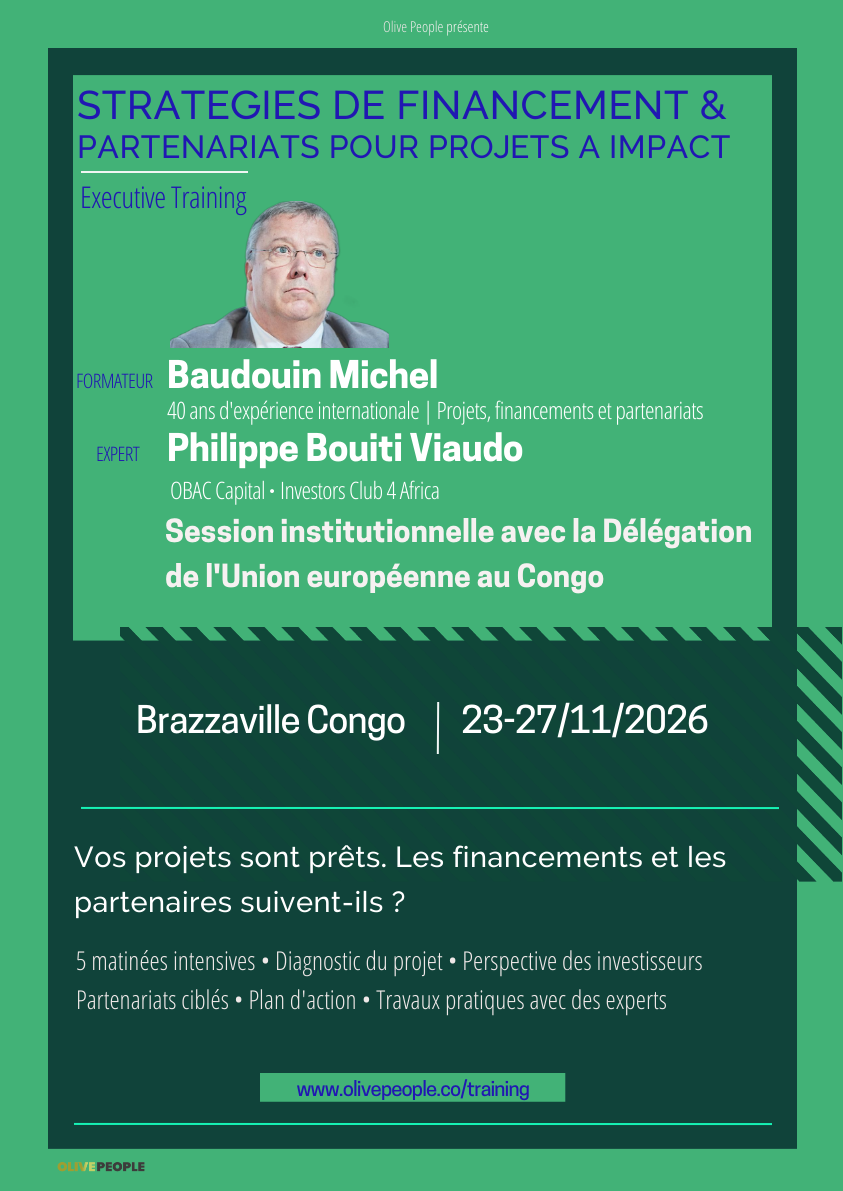
Olive People is bringing together project leaders and international experts in Brazzaville for a five-day Executive Training program on financing strategies and partnerships for impact projects.
The program combines practical project diagnostics, investors' perspectives, targeted partnership strategies and hands-on exercises.
Training is delivered by Prof Baudouin Michel, who brings 40 years of international experience intersecting the private sector, academia, institutions, and PPP expertise.
It features an institutional session with the European Union Delegation in Congo.
For organisations and funding institutions: This initiative illustrates our approach to capacity building—connecting technical expertise, institutional perspectives and practical application to help organizations turn ambitious projects into credible, actionable initiatives.
Explore the programme | Contact Olive People to discuss a tailored programme.
From Promising Projects to Fundable Initiatives
A compelling project idea is not necessarily an investable project. Bridging that gap requires more than fundraising skills: it takes sound project structuring, an understanding of investors' expectations, and the ability to build effective partnerships.
ONLY 4 SEATS LEFT.
Register here.
Building Green Skills Series | WEBINAR #2
Droughts, floods, heatwaves—climate change is no longer just a threat to our environment. It impacts infrastructure, economic activities, and the ability of organizations to operate sustainably.
Are organizations sufficiently prepared? Do they possess the skills required to adapt?
To explore these questions, Olive People will host Sandra Tchinianga, a licensed architect (DPLG), founder of PlanAfrika, and President of the Order of Architects of the Congo.
With over 15 years of experience, she will share her insights on the challenges of sustainable urban planning, bioclimatic architecture, and the development of skills essential for climate resilience in Africa.

Building Resilience: What Skills Do Cities, Infrastructure, and Organizations Need in the Face of Climate Change?
With Sandra Tchinianga
Architect DPLG · Founder PlanAfrika · President, Order of Architects of Congo
16/12/2026 2PM CET
Register below to get updates about this webinar.
RESOURCE: Olive People Contributes to the KBM 2026 Report
Africa's mining sector is attracting renewed attention as demand for critical minerals accelerates. Yet financing, infrastructure and mineral resources alone cannot guarantee the success of mining investments.
Who will build, operate, manage and maintain the projects? And where will the required skills come from?
These are among the human-capital questions explored in Patrick Gaincko's contribution to the KBM 2026 Report, published following the Kinshasa-based mining industry event.
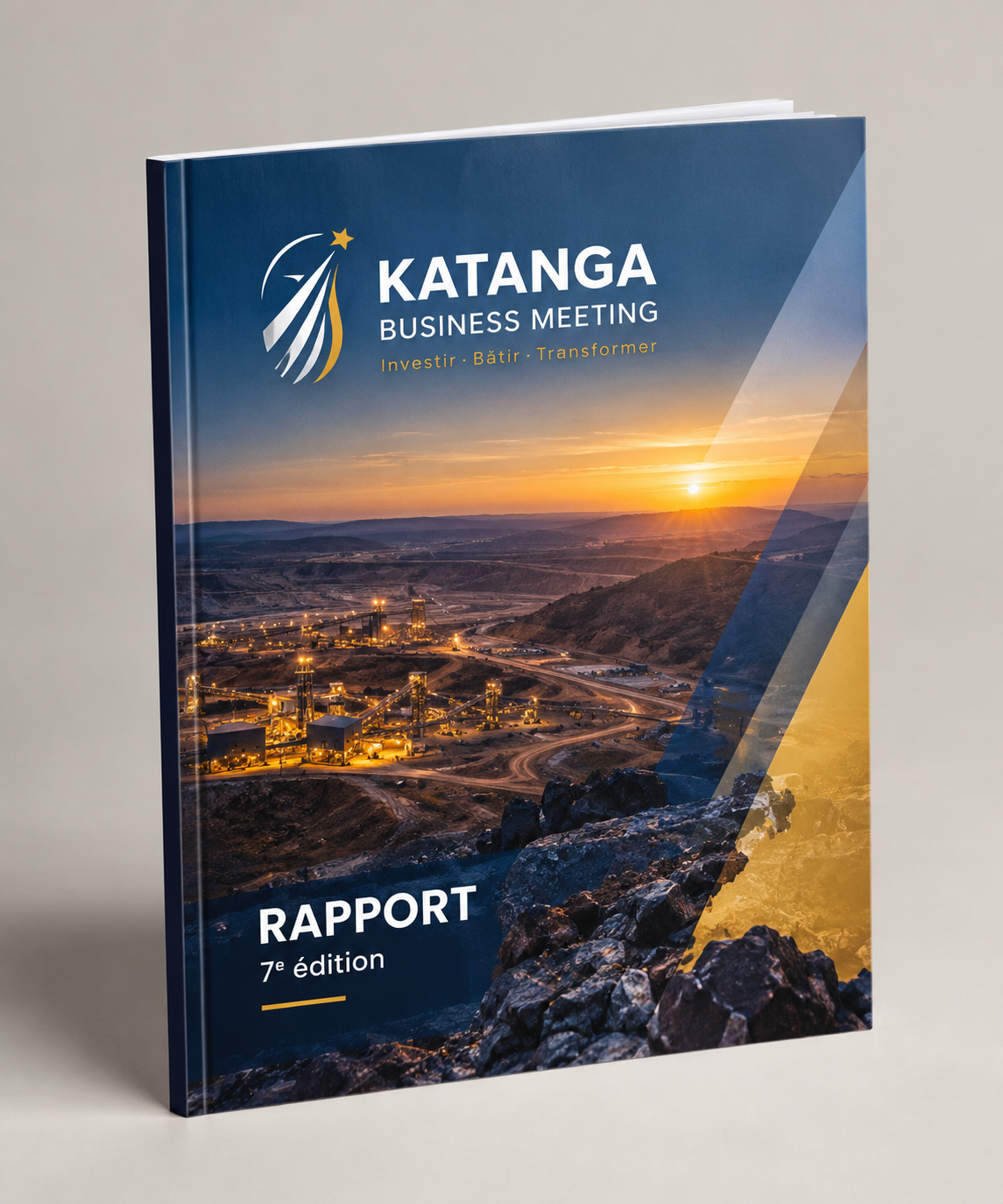
For mining companies, investors and development institutions, the message is clear: workforce capabilities should be considered early in investment planning, not treated as an operational challenge to resolve later.
Olive People welcomes opportunities to contribute to industry research, strategic dialogues and initiatives connecting investment, skills development and local economic participation. Discuss with Carole Kroonen.
The Olive People Briefing is a quarterly written by Patrick Gaincko, Founder of Olive People and Founder of ecosystemi. Distribution by Carole Kroonen and assistance by Lamia Boujjat at Olive People.
If you no longer want to receive the Olive People Briefing, please just let us know here.